


Spondylolisthesis Treatment in Bangalore – Dr. Shashidhar B K, Spine Surgeon
Spondylolisthesis Treatment in Bangalore – At a Glance
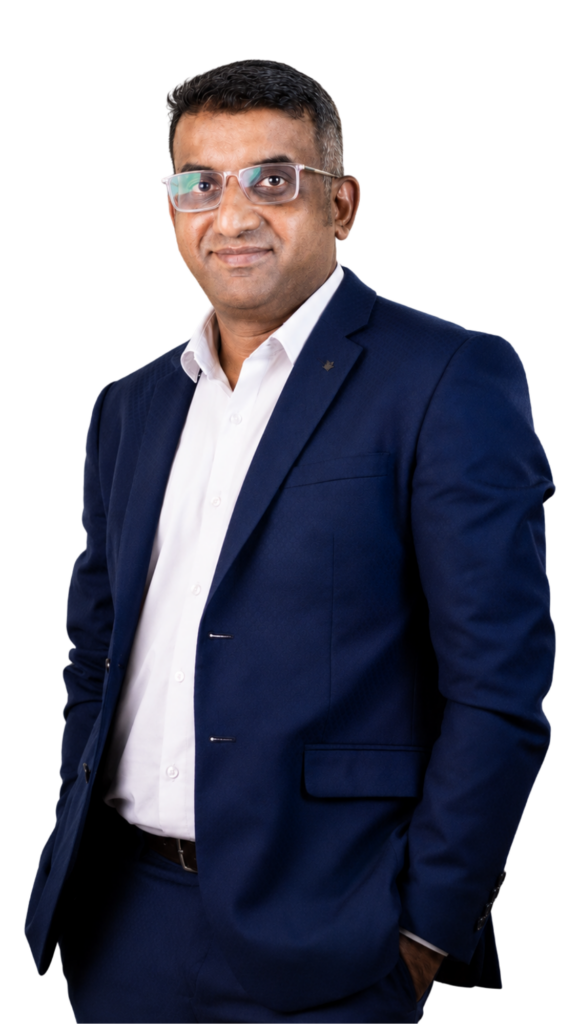
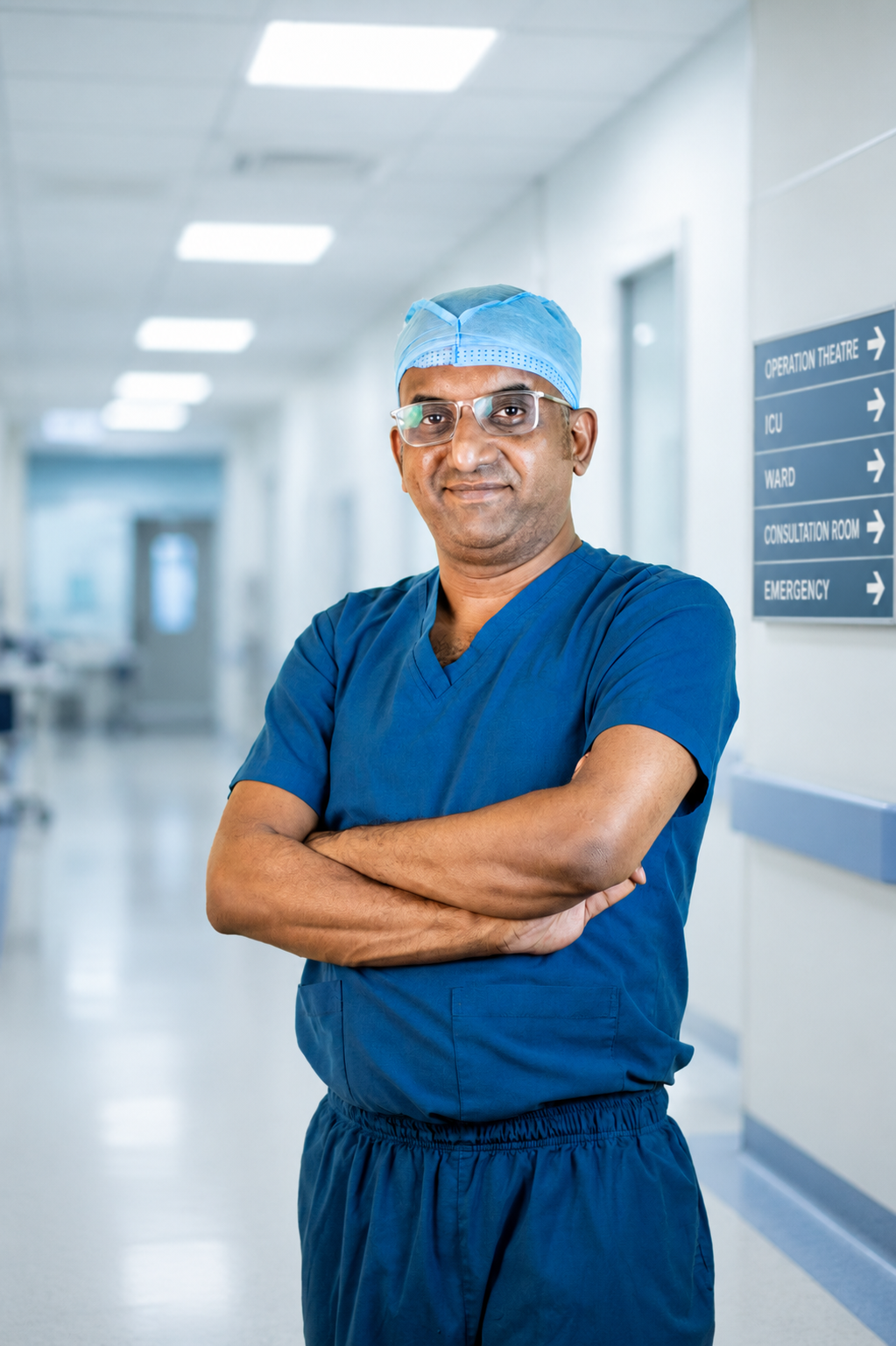
Spondylolisthesis is a condition in which one vertebra (spine bone) slips forward over the bone below it, most often in the lower back at L4–L5 or L5–S1. For spondylolisthesis treatment in Bangalore, Dr. Shashidhar B K treats patients at Bangalore Spine Specialist Clinic, HRBR Layout, Kalyan Nagar. He is a consultant spine surgeon with 20 years of experience, 15 of them as a spine specialist, and has dedicated spinal deformity training from Seoul, Singapore and Cedars-Sinai, Los Angeles.
- Common symptoms: lower back pain, tight hamstrings, leg pain or numbness (sciatica), and leg heaviness on walking
- First-line care: most patients improve with medicines, physiotherapy, core strengthening and, if needed, spinal injections
- Surgery is advised when: leg pain or weakness persists despite 6–12 weeks of good non-surgical care, walking distance keeps shrinking, the slip is progressing, or there is bladder or bowel trouble
- Surgical options: minimally invasive decompression, minimally invasive TLIF (fusion), endoscopic spine surgery, and reduction with fusion for high-grade slips
- Hospital stay after minimally invasive surgery: usually 2–4 days, with walking on the day after surgery
- Consultation: Monday–Saturday, 5 PM – 9 PM. Call +91 94483 11068
What Is Spondylolisthesis?
 The word spondylolisthesis comes from Greek: spondylos means vertebra and olisthesis means slipping. In simple terms, it is a slipped vertebra. It is different from a slipped disc, where the soft cushion between two bones bulges out.
When a vertebra slides forward, the spinal canal and the side openings (foramina) through which the nerves leave the spine become narrow. This squeezes the nerves and causes leg pain, numbness and walking difficulty. The slipped segment can also move abnormally, which causes mechanical back pain. You can read a detailed medical overview of the condition on StatPearls (NCBI Bookshelf).
Not every slip needs surgery. Many people with a mild slip live normal lives with exercise and good posture. Good spondylolisthesis treatment in Bangalore starts with an accurate diagnosis and a plan matched to your type of slip, its grade and your symptoms.
Types of Spondylolisthesis
- Degenerative spondylolisthesis: the most common type in adults over 50, especially women. Wear and tear of the disc and facet joints lets the vertebra slip, most often at L4–L5. It is frequently combined with lumbar canal stenosis.
- Isthmic (lytic) spondylolisthesis: caused by a stress fracture or defect in a thin part of the vertebra called the pars interarticularis (spondylolysis). It often starts in childhood or adolescence, commonly at L5–S1, and is seen in young athletes and active adults.
- Dysplastic (congenital) spondylolisthesis: due to abnormal development of the lower spine from birth. These slips can become high grade and are best treated by a surgeon trained in spinal deformity.
- Traumatic spondylolisthesis: after a fall, accident or injury that fractures part of the spine.
- Pathological spondylolisthesis: when bone is weakened by infection, tumour or metabolic bone disease.
- Post-surgical (iatrogenic) spondylolisthesis: instability after a previous spine operation that removed too much supporting bone.
Grades of Spondylolisthesis
Spondylolisthesis is graded on a standing X-ray by how far the upper vertebra has slipped over the one below it (the Meyerding grading):
| Grade | Amount of slip | Usual approach |
|---|---|---|
| Grade I | Up to 25% | Usually non-surgical; surgery only if nerve symptoms persist |
| Grade II | 25–50% | Non-surgical first; minimally invasive fusion if symptoms continue |
| Grade III | 50–75% | High grade – often needs fusion, with attention to spinal balance |
| Grade IV | 75–100% | High grade – deformity-level planning, reduction and fusion |
| Grade V (spondyloptosis) | More than 100% – the vertebra has fallen off the one below | Complex deformity surgery |
Grades I and II are called low-grade slips and are the most common. Grades III to V are high-grade slips. They change the shape and balance of the whole spine and pelvis, which is why high-grade spondylolisthesis treatment in Bangalore should be planned by a spine deformity surgeon.
Symptoms of Spondylolisthesis
- Lower back pain that is worse on standing, walking or bending backwards, and better on sitting or bending forwards
- Pain, tingling or numbness spreading to the buttock, thigh or leg (sciatica)
- Heaviness or cramping in the legs on walking, relieved by sitting (neurogenic claudication)
- Tight hamstrings and a change in walking pattern, especially in teenagers
- Weakness in the foot or leg
- A visible step or change in posture of the lower back in higher-grade slips
Seek urgent care if you develop sudden leg weakness, numbness in the saddle area, or loss of bladder or bowel control. These can be signs of severe nerve compression (cauda equina syndrome). Call +91 94483 11068 without delay.
How Spondylolisthesis Is Diagnosed
Dr. Shashidhar B K starts with a detailed history and a careful neurological examination. Tests are chosen to answer three questions: how much has the bone slipped, is it moving, and which nerves are being pressed?
- Standing X-rays of the lower back to grade the slip
- Flexion–extension (bending) X-rays to check whether the segment is unstable
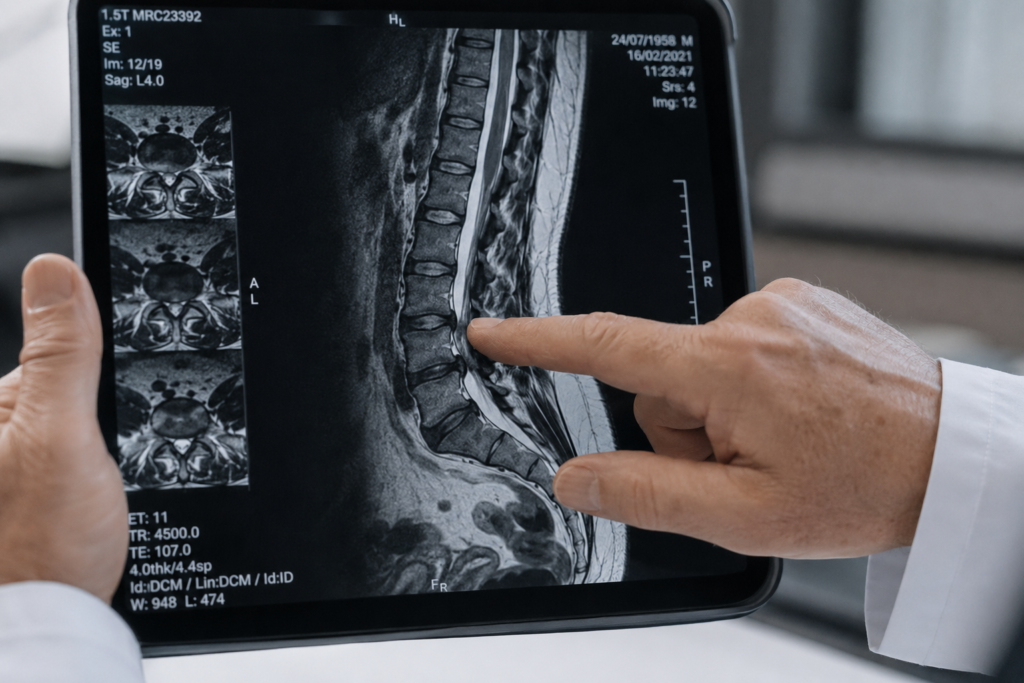
- MRI scan to see nerve compression, disc health and canal narrowing
- CT scan to study a pars defect or plan screw placement
- Whole-spine standing X-ray for high-grade slips, to measure spinopelvic balance (pelvic incidence and sagittal alignment)
If you already have scans, bring them to your first visit. A review of existing reports often saves time and cost.
Spondylolisthesis Treatment in Bangalore Without Surgery
Most patients with a low-grade slip do not need an operation. Non-surgical spondylolisthesis treatment in Bangalore at our clinic usually includes:
- Activity changes: short-term avoidance of heavy lifting, twisting and backward bending, without complete bed rest
- Medicines: pain relievers, anti-inflammatory tablets and nerve-pain medicines for a limited period
- Physiotherapy: core stabilisation, hamstring stretching, posture training and graded walking
- Weight management: reducing load on the lower spine
- Brace: occasionally for young patients with a fresh pars stress fracture, to help it heal
- Spinal injections: selective nerve root blocks or epidural steroid injections to calm severe leg pain
We usually give a structured non-surgical programme 6–12 weeks to work. Many patients improve enough to return to work, sport and daily life without surgery.
When Is Surgery Needed for Spondylolisthesis?
- Leg pain, numbness or weakness that continues despite good non-surgical treatment
- Walking distance that keeps reducing because of leg pain or heaviness
- A slip that is getting worse on repeat X-rays, especially in children and teenagers
- High-grade slips (Grade III–V) with pain, deformity or nerve symptoms
- Bladder or bowel problems, or rapidly increasing weakness – these need urgent surgery
Surgical Options for Spondylolisthesis Treatment in Bangalore
The right operation depends on the type and grade of the slip, how unstable the segment is, your bone quality and your general health. Dr. Shashidhar B K explains every option with its pros and cons before you decide.
- Minimally invasive decompression: frees the squeezed nerves through a small incision. It suits selected patients with a stable, low-grade degenerative slip.
- Minimally invasive TLIF (MIS-TLIF): the most common spondylolisthesis surgery. Through small incisions, the nerves are freed, the worn disc is replaced with a spacer (cage) and bone graft, and the segment is held with screws placed through the skin under X-ray guidance. The slip is often partly or fully corrected.
- Endoscopic and UBE spine surgery: keyhole decompression through 1–2 cm incisions for selected patients. Learn more about endoscopic spine surgery in Bangalore and UBE endoscopy in Bangalore.
- Pars repair: in some young patients with spondylolysis and little or no slip, the pars defect can be repaired directly, preserving movement.
- Reduction and fusion for high-grade slips: carefully planned deformity surgery that restores spinal and pelvic balance while protecting the nerves.
Why Spinal Deformity Training Matters in Spondylolisthesis Surgery
A slipped vertebra is not only a nerve problem – it is a problem of spinal alignment. In higher-grade slips, the lower spine tilts, the pelvis rotates and the whole body leans forward. Fusing the spine in the wrong position can leave patients with ongoing pain, a stooped posture or stress on the levels above.
Dr. Shashidhar B K has dedicated spinal deformity training at three leading centres, in this order:
- The Scoliosis Clinic and Spine and Scoliosis Research Institute, Korea University Guro Hospital, Seoul
- 1-year spine deformity training at National University Hospital, Singapore, under Prof. Hee-Kit Wong
- SRS Robert Winter Fellowship with Prof. Neel Anand at Cedars-Sinai, Los Angeles
He has also completed the SICOT Minimally Invasive Spine Trauma Surgery Fellowship (2014) at Klinik für Unfall-, Hand- und Wiederherstellungschirurgie, Homburg, Germany. This training in deformity correction and minimally invasive surgery means every spondylolisthesis operation is planned around spinopelvic balance – not just the slipped level. It is the same expertise he uses as a spine deformity surgeon in Bangalore and scoliosis surgeon in Bangalore.
How Minimally Invasive TLIF Is Done – Step by Step
- Planning: X-rays, MRI and CT are studied to plan screw sizes, the cage and the correction needed.
- Anaesthesia: the operation is done under general anaesthesia with nerve monitoring when required.
- Small incisions: instead of one long cut, small incisions are made on either side of the spine, and the muscles are gently separated rather than stripped.
- Nerve decompression: the bone and thickened ligament pressing on the nerves are removed.
- Disc removal and cage: the worn disc is cleared and a cage filled with bone graft is placed to restore disc height.
- Screws and rods: screws are inserted through the skin under live X-ray guidance and joined with rods, reducing the slip where possible.
- Closure: the small wounds are closed, and most patients walk with support the next day.
Recovery After Spondylolisthesis Surgery
- Day 1: walking with support; leg pain often improves immediately
- Hospital stay: usually 2–4 days after minimally invasive surgery
- 2 weeks: wound check; short walks increased daily
- 4–6 weeks: return to desk work and light daily activities for most patients
- 6–12 weeks: supervised physiotherapy for core strength
- 6–12 months: the fusion becomes solid; heavier work and sport are resumed gradually
Recovery varies with age, the number of levels treated and general health. You receive a written recovery plan and direct access to our team for follow-up.
Benefits and Risks of Spondylolisthesis Surgery
Benefits of minimally invasive surgery include smaller scars, less muscle damage, less blood loss, less pain after surgery, a shorter hospital stay and a faster return to daily life. Most patients get good relief of leg pain and better walking distance.
Possible risks, as with any spine operation, include infection, bleeding, nerve injury, dural tear, screw-related problems, the fusion not healing, and future wear at the level above (adjacent segment disease). These risks are low in experienced hands and are discussed in detail before surgery.
Spondylolisthesis Treatment Cost in Bangalore
The cost of spondylolisthesis treatment in Bangalore depends on whether non-surgical care is enough, the type of surgery (decompression, MIS-TLIF or endoscopic), the number of levels, implants, the hospital and room category, and tests such as MRI and CT. Most health insurance policies cover spondylolisthesis surgery. After your consultation, our team gives you a clear written estimate. Call +91 94483 11068 for details.
Why Choose Dr. Shashidhar B K for Spondylolisthesis Treatment in Bangalore?
- Spine specialist: MBBS (BMCRI), MS (PGIMER, Chandigarh), DNB, MNAMS and FNB Spine Surgery, with 20 years of experience, 15 of them dedicated to the spine
- Spinal deformity training: Korea University Guro Hospital, Seoul; National University Hospital, Singapore under Prof. Hee-Kit Wong; and the SRS Robert Winter Fellowship with Prof. Neel Anand at Cedars-Sinai
- Minimally invasive expertise: SICOT Minimally Invasive Spine Trauma Surgery Fellowship (2014), Homburg, Germany
- Experience: 3000+ spine surgeries and 20,000+ patients treated
- Conservative first: surgery is recommended only when it is truly needed
- Clear guidance: scans explained in simple language, written estimates and direct follow-up
Spondylolisthesis Treatment for Patients Across Bangalore and Beyond
Our clinic in HRBR Layout, Kalyan Nagar is convenient for patients from Hebbal, Banaswadi, Hennur, Kammanahalli, RT Nagar, Ramamurthy Nagar, Lingarajapuram, Horamavu, Indiranagar, Whitefield, KR Puram and Yelahanka. We also see patients travelling from Chennai, Salem, Krishnagiri and other parts of Karnataka for spondylolisthesis treatment in Bangalore.
Bangalore Spine Specialist Clinic
220, CMR Main Rd, HRBR Layout 3rd Block, Kalyan Nagar, Bengaluru 560043
Phone: +91 94483 11068 | Email: drshashidharbk@gmail.com
Consultation: Monday–Saturday, 5 PM – 9 PM
Related Treatments
- Back pain treatment in Bangalore
- Sciatica treatment in Bangalore
- Spine deformity surgeon in Bangalore
- Kyphosis correction surgery in Bangalore
- Endoscopic spine surgeon in Bangalore
Frequently Asked Questions About Spondylolisthesis Treatment in Bangalore
What is the best treatment for spondylolisthesis?
Most low-grade (Grade I–II) slips are treated first without surgery: medicines, physiotherapy with core strengthening, activity changes and, if needed, spinal injections. Surgery, usually minimally invasive decompression or MIS-TLIF fusion, is advised when leg pain, numbness or weakness continues after 6–12 weeks of good non-surgical care, the slip is progressing, or the slip is high grade.
Can spondylolisthesis be treated without surgery?
Yes. Most patients with a low-grade spondylolisthesis improve with non-surgical treatment such as physiotherapy, core strengthening, medicines, weight management and selective nerve root or epidural injections. Surgery is needed only for persistent nerve symptoms, progressive slips, high-grade slips or bladder and bowel problems.
Who is the best doctor for spondylolisthesis treatment in Bangalore?
Choose a dedicated spine surgeon with training in both minimally invasive surgery and spinal deformity. Dr. Shashidhar B K is a consultant spine surgeon in Bangalore with 20 years of experience (15 as a spine specialist), spinal deformity training at Korea University Guro Hospital in Seoul, National University Hospital Singapore and the SRS Robert Winter Fellowship at Cedars-Sinai, and the SICOT Minimally Invasive Spine Trauma Surgery Fellowship. He consults at Bangalore Spine Specialist Clinic, Kalyan Nagar.
What is the cost of spondylolisthesis surgery in Bangalore?
The cost depends on the type of surgery (decompression, MIS-TLIF or endoscopic), the number of levels, implants, the hospital and room category, and tests such as MRI and CT. Most health insurance policies cover spondylolisthesis surgery. A clear written estimate is given after consultation; call +91 94483 11068 for details.
Is spondylolisthesis surgery safe?
Modern minimally invasive spondylolisthesis surgery is safe and effective in experienced hands. Possible risks include infection, bleeding, nerve injury, dural tear, implant problems, non-union of the fusion and adjacent segment wear. These risks are low and are discussed in detail before surgery.
How long does it take to recover from spondylolisthesis surgery?
After minimally invasive TLIF, most patients walk the next day, go home in 2–4 days, return to desk work in 4–6 weeks and resume heavier activity gradually. The fusion becomes solid over 6–12 months.
Can spondylolisthesis get worse?
Most adult low-grade slips stay stable for years. Slips are more likely to progress in children and teenagers during growth spurts, and in high-grade or dysplastic types. Regular review with standing X-rays helps detect progression early.
What should I avoid with spondylolisthesis?
Avoid heavy lifting, repeated twisting, backward bending of the lower back and high-impact sports during painful phases. Keep walking, stay active and follow a core strengthening programme guided by your spine surgeon or physiotherapist.
Where is Dr. Shashidhar B K’s clinic for spondylolisthesis treatment in Bangalore?
Bangalore Spine Specialist Clinic, 220, CMR Main Rd, HRBR Layout 3rd Block, Kalyan Nagar, Bengaluru 560043. Consultation hours are Monday to Saturday, 5 PM to 9 PM. Call +91 94483 11068 to book.
Book your consultation for spondylolisthesis treatment in Bangalore: call +91 94483 11068 or book an appointment online.

Specialist You Can Trust
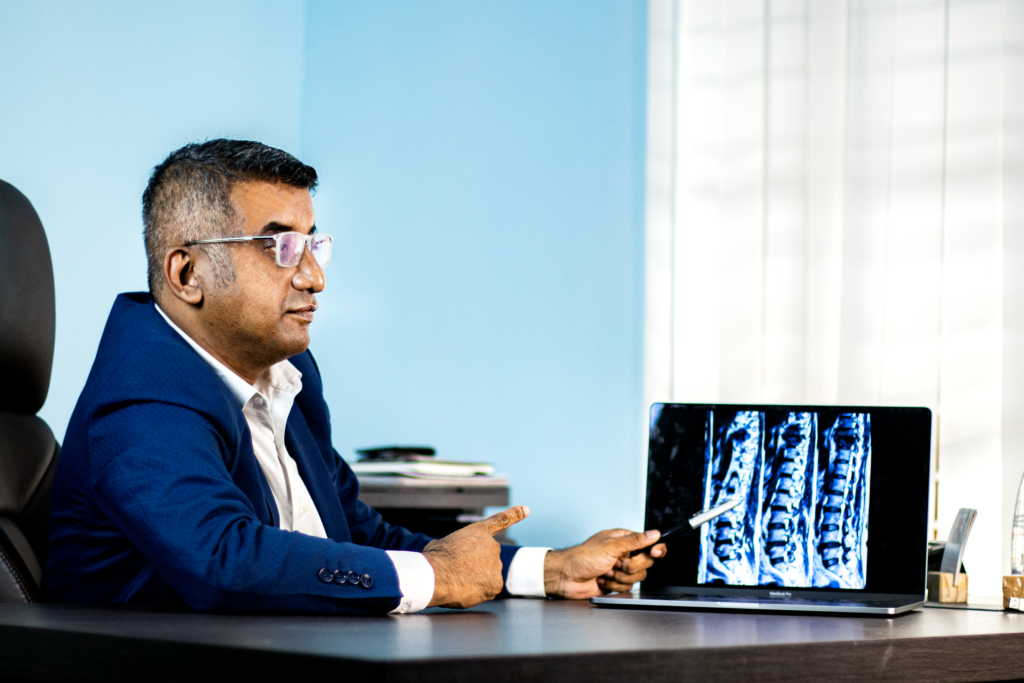
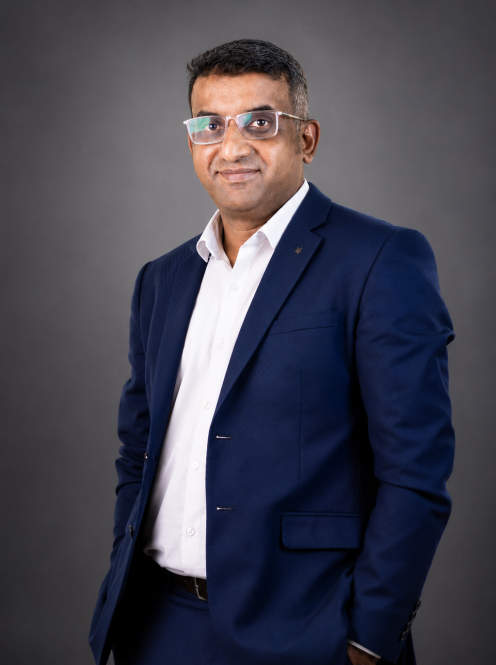
Dr. Shashidhar BK is a dedicated spine surgeon with focused training in complex spinal conditions — bringing you the confidence that comes from seeing a true specialist, not a generalist.

Advanced Surgical Technology
Dr. Shashidhar BK operates with the latest minimally invasive tools and imaging-guided systems, ensuring greater accuracy, smaller incisions, and significantly shorter recovery times.

Support at Every Stage
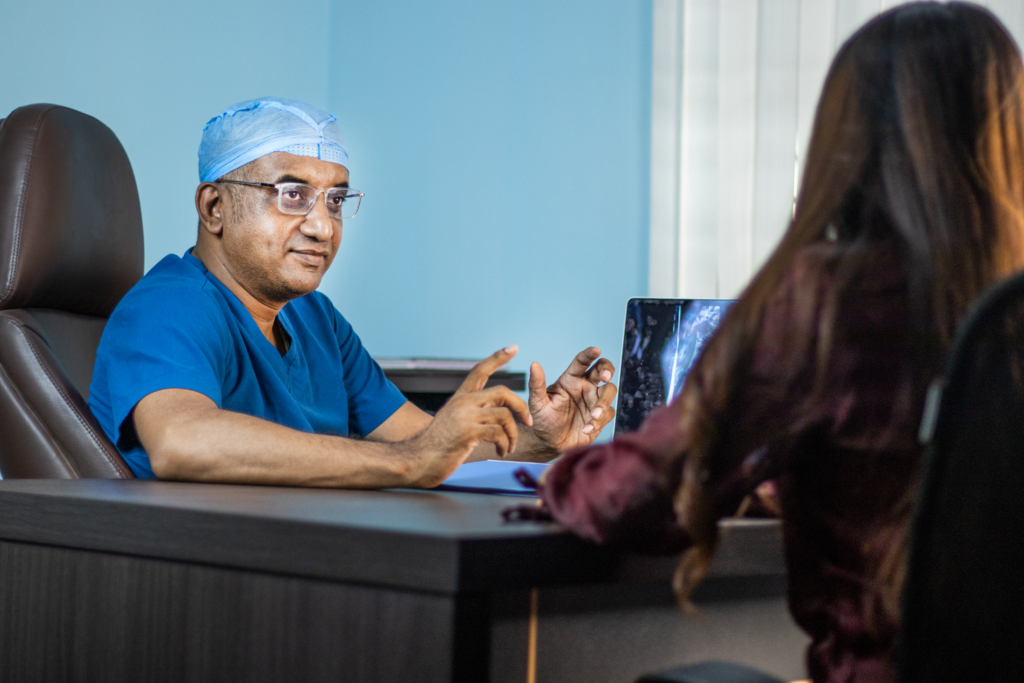
From your first appointment to post-operative follow-ups, our team is accessible and responsive — so you always have guidance when you need it most.

Safety-First Approach
Every procedure is planned with the utmost care. Dr. Shashidhar BK follows rigorous safety protocols and takes a conservative approach — recommending surgery only when it's truly necessary.