

By Dr. Shashidhar B.K., MBBS (BMCRI), MS Ortho (PGI Chandigarh), DNB Ortho, MNAMS, FNB (Spine Surgery)
Consultant Spine Surgeon, Bangalore Spine Specialist Clinic
When an older parent or grandparent starts struggling to walk even a short distance to the neighbourhood park or temple because their legs feel heavy, numb, or painfully cramped, the family faces a stressful medical crossroads. Conservative measures—physiotherapy, targeted medications, and epidural injections—often bring relief in the early stages. Yet there comes a point when the spinal canal narrows so tightly that the nerves simply do not have enough room to breathe.
At that stage, a spine specialist usually brings up surgery. And almost immediately, families in Bengaluru find themselves caught between two terms that sound equally intimidating: lumbar microdecompression and lumbar spinal fusion.
If you have been searching online late at night trying to understand microdecompression vs spine fusion in Bangalore, you are not alone. Sons, daughters, and senior patients walk into my clinic in Kalyan Nagar every week carrying thick folders of MRI scans, three different opinions, and a mountain of anxiety. One doctor may have suggested “just freeing the nerve,” while another recommended “fixing the back with screws and rods.” Naturally, the family wonders: Why are the recommendations different? Isn’t fusion too big an operation for someone in their seventies? On the other hand, if we only do decompression, will the pain come back?
This guide is written specifically for patients and families—without dense medical jargon—to help you understand how both surgeries work, why age changes the equation, and how a spine surgeon decides which approach offers the safest, most lasting relief.
Understanding Why Seniors Develop Lower Back and Leg Symptoms
Before comparing the two operations, it helps to picture what is actually happening inside an ageing lower back.
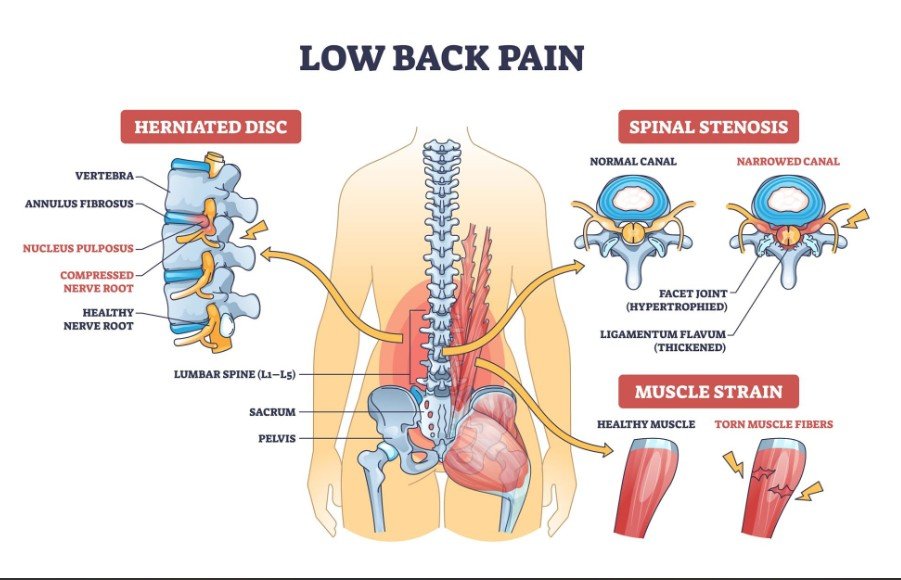
Your lumbar spine is made up of five sturdy blocks of bone (vertebrae) stacked one on top of the other. Between each pair of bones sits a soft, shock-absorbing cushion called an intervertebral disc. Behind the bones runs a hollow tunnel—the spinal canal—which houses the delicate bundle of nerves travelling down to your hips, thighs, calves, and feet.
Over decades of walking, bending, lifting, and living, normal wear and tear takes place:
- Discs lose water and flatten: Just like an old car tyre losing air, spinal discs gradually shrink in height.
- Ligaments thicken: To compensate for the slight settling of the spine, the supportive ligaments inside the spinal canal grow thicker and stiffer.
- Facet joints enlarge: The small guiding joints at the back of the spine develop arthritis and form tiny bony overgrowths called bone spurs.
When thickened ligaments, bulging discs, and bone spurs crowd into the spinal canal all at once, the tunnel narrows. Doctors call this lumbar spinal stenosis.
The hallmark symptom of lumbar spinal stenosis in older adults is neurogenic claudication. Patients typically say something like: “Doctor, I can sit comfortably all day, and I have no pain lying in bed. The moment I stand up and walk for five or ten minutes, both my calves feel like blocks of wood. If I sit down or lean forward on a shopping trolley, the heaviness fades away.”
Leaning forward slightly opens up the spinal canal by a couple of millimetres—just enough to take the pressure off the pinched nerves. Surgery aims to make that extra breathing room permanent.
What Is Lumbar Microdecompression?
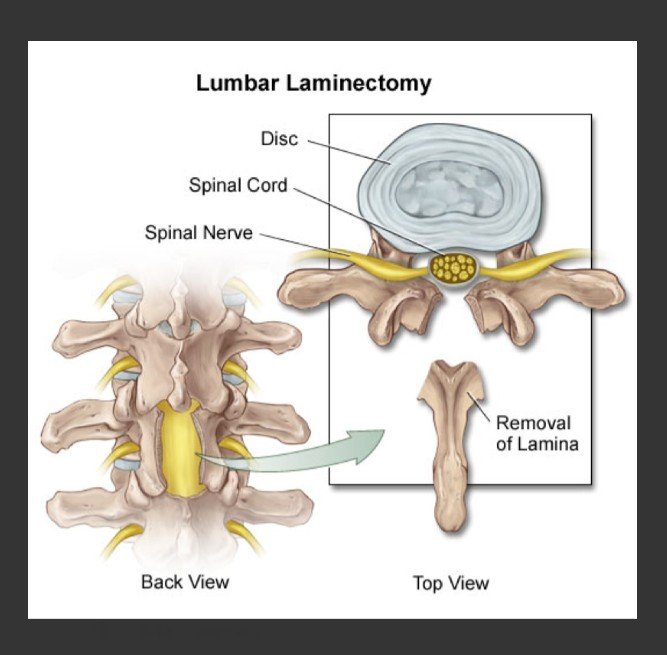
Think of lumbar microdecompression as precision plumbing for a blocked pipe. Nothing is welded together, and no metal implants are placed in the back. The sole purpose of the operation is to clear away the overgrown bone and thickened ligament pressing on the nerves, while leaving the natural architecture and flexibility of the spine intact.
How the Procedure Works
Using Minimally Invasive Spine Surgery (MISS) techniques, the surgeon makes a tiny incision—usually less than an inch long—in the lower back. Instead of slicing and stripping the main back muscles away from the bone, a series of slender, smooth tubes (tubular retractors) are gently passed between the muscle fibres to create a narrow working tunnel.
Looking through a high-magnification operating microscope or a high-definition spinal endoscope, the surgeon carefully shaves away the thickened ligament and small edges of bone (a micro-laminotomy or unilateral laminotomy for bilateral decompression). Once the nerve roots are visibly free and pulsating normally, the tube is removed, and the muscle fibres naturally fall back into place.
Key Characteristics for Elderly Patients
- Preserves natural movement: Because no bones are joined together, the spine bends and twists just as it did before.
- Gentle on the body: Blood loss is minimal (often just a few teaspoons), anaesthesia time is shorter, and the small incision causes far less post-operative muscle soreness.
- Rapid mobilisation: Most seniors stand and walk with support on the very same evening or the morning after surgery.
What Is Lumbar Spinal Fusion?
If microdecompression is clearing a blocked pipe, lumbar spinal fusion is reinforcing a shifting bridge.
Sometimes, clearing away bone and ligament is not enough—or doing so alone could leave an already wobbly segment of the spine unstable. When two vertebrae are slipping abnormally against each other, the abnormal motion itself causes severe mechanical back pain and repeatedly pinches the nerves.
How the Procedure Works
In a spinal fusion—most commonly performed today as a Transforaminal Lumbar Interbody Fusion (TLIF)—the surgeon accomplishes two tasks in a single operation:
- Decompression: Removing the bone spurs, thickened ligament, and worn-out disc material that are squeezing the nerves.
- Stabilisation: Placing a medical-grade spacer (cage) packed with bone graft into the empty disc space to restore normal height, and anchoring the two vertebrae together with titanium pedicle screws and connecting rods.
Over the following three to six months, the patient’s body grows new bone across the graft, permanently welding the two vertebrae into a single, solid block of bone. Modern Minimally Invasive TLIF (MIS TLIF) allows us to place these cages and screws through small keyhole incisions rather than large open cuts, dramatically reducing muscle trauma for older adults.
Why Age Changes the Decision-Making Equation
In a healthy 45-year-old, the body bounces back quickly from almost any surgery, and bone density is strong enough to hold screws firmly. In a 72- or 80-year-old, however, a responsible spine surgeon has to weigh several age-specific realities:
1. Bone Quality and Osteoporosis
Many senior citizens—especially postmenopausal women—have osteopenia or osteoporosis, meaning the bones are softer and more porous. Screws rely on solid bone to grip tightly. If bone density is very low, screws in a fusion surgery carry a higher risk of loosening or pulling out before the bone heals. Microdecompression avoids hardware altogether, sidestepping the hurdle of weak bone.
2. Medical Comorbidities and Anaesthesia Time
Older adults frequently live with well-managed diabetes, high blood pressure, heart stents, kidney changes, or mild breathing issues. Every extra hour under general anaesthesia slightly increases the stress on the heart and lungs. A single-level microdecompression typically takes 45 to 75 minutes, whereas a fusion takes 2 to 3.5 hours. Shorter surgery time means a smoother, safer anaesthesia experience.
3. The Risk of Delirium and Deconditioning
Seniors lose muscle strength remarkably fast if they stay in bed for several days. Longer hospital stays and stronger pain medications after major surgery can occasionally trigger temporary post-operative confusion (delirium) in older patients. Getting a senior out of bed and walking within hours—a hallmark of microdecompression—protects both physical strength and mental sharpness.
4. Life Expectancy and Adjacent Segment Stress
When two vertebrae are fused solid, the levels immediately above and below have to work harder to absorb daily bending forces. Over 8 to 15 years, those neighbouring discs can wear out faster (known as adjacent segment disease). While fusion may be essential when the spine is genuinely unstable, avoiding unnecessary fusion preserves the natural shock-absorbing rhythm of an ageing spine.
When Is Microdecompression Enough—and When Is Fusion Truly Necessary?
This is the single most important question in microdecompression vs spine fusion in Bangalore. Over the last decade, major international spine trials—including landmark studies published in The New England Journal of Medicine—have transformed how spine specialists treat elderly patients.
Research consistently shows that for uncomplicated lumbar spinal stenosis (even with a mild, stable slip), microdecompression alone gives just as much leg pain relief and walking improvement as spinal fusion—with half the hospital stay, lower blood loss, and fewer complications.
However, microdecompression is not a magic wand for every spine problem. Attempting a simple decompression when the spine is structurally unstable can lead to worsening slippage and severe back pain down the road.
When Microdecompression Alone Is Usually Ideal
- Primary symptom is leg pain, heaviness, or numbness: The patient walks bent forward and feels relief when sitting, with minimal mechanical lower back pain.
- Stable spinal alignment: Standing flexion-extension X-rays show that the vertebrae do not shift or wobble abnormally when the patient bends forward and backward.
- No severe spinal curvature: The spine is relatively straight without major sideways collapse (degenerative scoliosis).
- High medical frailty or severe osteoporosis: Where keeping surgery brief and avoiding implants is the safest medical priority.
When Lumbar Fusion Becomes the Smarter Choice
- Unstable Spondylolisthesis: Standing bending X-rays reveal that one vertebra slides noticeably forward and backward over the bone below it, pinching nerves with every step.
- Foraminal Collapse with Severe Disc Loss: The disc has worn down so flat that the side doorways (foramina) where nerves exit are crushed vertically; only inserting a spacer cage can jack open that doorway permanently.
- Adult Degenerative Scoliosis or Kyphosis: The spine has tilted sideways or pitched severely forward, throwing the patient’s balance off-centre.
- Recurrent Stenosis After Previous Surgery: Scar tissue and prior bone removal mean further decompression would destabilise the joint, requiring internal support.
Comprehensive Comparison: Advantages and Disadvantages
To help you weigh both options side by side during family discussions, here is a detailed breakdown of the benefits and trade-offs of each procedure for older adults.
Table 1: Advantages and Disadvantages of Lumbar Microdecompression in the Elderly
| Category | Advantages (Pros) | Disadvantages / Limitations (Cons) |
|---|---|---|
| Surgical Trauma | Tiny incision (under 1 inch); back muscles are gently parted rather than cut. | Limited access if major structural realignment or deformity correction is needed. |
| Anaesthesia & Blood Loss | Short operative time (45–75 mins) and minimal blood loss; safer for seniors with heart or lung conditions. | Still requires general or spinal anaesthesia, carrying standard baseline medical risks. |
| Implants & Bone Density | Zero screws, rods, or cages—completely unaffected by osteoporosis or weak bone. | Does not mechanically lock a loose or slipping spinal segment in place. |
| Spinal Flexibility | Preserves natural bending and twisting motion; avoids extra stress on neighbouring discs. | Does not cure deep mechanical back pain caused by severe disc collapse or facet arthritis. |
| Recovery Speed | Walking within hours; hospital discharge in 24–48 hours; light daily routine in 2–3 weeks. | Nerves take time to heal; tingling or mild numbness may fade gradually over months. |
| Long-Term Durability | Excellent, lasting relief of leg claudication in stable spines. | Roughly 10–15% chance over several years that further wear or slippage could require a future fusion. |
Table 2: Advantages and Disadvantages of Lumbar Spinal Fusion in the Elderly
| Category | Advantages (Pros) | Disadvantages / Limitations (Cons) |
|---|---|---|
| Spinal Stability | Permanently eliminates painful, abnormal motion between slipping vertebrae. | Longer operation (2–3.5 hours) with slightly higher blood loss and anaesthesia stress. |
| Disc Height & Nerve Space | Interbody cage restores lost disc height and opens tight side nerve exits permanently. | Relies on screws gripping bone; severe osteoporosis requires pre-op bone-building therapy or cement-augmented screws. |
| Deformity Correction | Can realign crooked or forward-stooping spines to restore upright walking posture. | Permanent loss of flexibility at the fused level(s), placing slightly more load on adjacent discs. |
| Back + Leg Pain Relief | Addresses both nerve compression (leg pain) and mechanical instability (severe back pain). | More immediate post-operative back soreness compared to decompression alone. |
| Hospital Stay & Rehab | High long-term structural durability once solid bone fusion occurs. | Hospital stay of 3–5 days; full bone healing takes 3–6 months; requires strict avoidance of bending/lifting early on. |
| Surgical Risks | Modern MIS TLIF cuts recovery time sharply compared to older open fusion methods. | Small risks of non-union (incomplete bone healing), hardware loosening, or infection. |
At-a-Glance Summary: Microdecompression vs. Spine Fusion
If you want a quick reference sheet to bring along to your consultation, this summary table compares the two surgeries across every practical factor that matters to a senior patient and their caregivers.
| Clinical Factor | Lumbar Microdecompression | Lumbar Spinal Fusion (MIS TLIF / Open) |
|---|---|---|
| Primary Goal | Free pinched nerves by removing overgrown bone and ligament | Free pinched nerves AND weld unstable vertebrae together |
| Best Suited For | Spinal stenosis or disc herniation without instability | Stenosis with unstable spondylolisthesis, deformity, or disc collapse |
| Hardware Used | None (100% implant-free) | Titanium screws, rods, interbody spacer cage, and bone graft |
| Typical Surgery Duration | 45 – 75 minutes (single level) | 2 – 3.5 hours (single level) |
| Average Hospital Stay | 1 – 2 days | 3 – 5 days |
| First Walk After Surgery | Same evening or next morning | Next morning with physiotherapy support |
| Return to Light Home Routine | 2 – 3 weeks | 4 – 6 weeks |
| Complete Biological Healing | 6 – 8 weeks (soft tissue healing) | 3 – 6 months (solid bone bridge formation) |
| Impact of Osteoporosis | Minimal impact on surgical success | Critical factor; requires bone density optimization |
| Estimated Cost in Bangalore | Lower (no implant costs, shorter hospital stay) | Higher (includes specialized titanium/PEEK implants and longer stay) |
What the Recovery Journey Actually Looks Like for Seniors
Families often worry far more about the weeks after surgery than the operation itself. Knowing what happens day by day removes much of that fear.
Recovering from Lumbar Microdecompression
Because the supporting back muscles remain intact, recovery is surprisingly straightforward. You can read a detailed week-by-week breakdown in our guide on Navigating Your Recovery After Micro Lumbar Decompression, but here is the typical rhythm for an older adult:
- Days 1–2 (Hospital): You walk down the hospital corridor with a physiotherapist within 12 to 24 hours of surgery. Most patients notice that the heavy, vice-like leg cramping they felt before surgery is dramatically lighter right away.
- Weeks 1–2 (At Home): You can climb stairs slowly, use a regular western toilet, and take short 10- to 15-minute walks inside the house or apartment corridor several times a day. We follow the simple BLT rule—no Bending forward at the waist, no Lifting anything heavier than a kettle (2–3 kg), and no Twisting the spine.
- Weeks 3–6: Walking distance steadily increases to 30–40 minutes outdoors. Gentle core and hip stability exercises begin under guidance.
- Beyond 6 Weeks: Most seniors return to morning walks in the park, social outings, travel, and independent daily living.
Recovering from Lumbar Spinal Fusion
Recovery from fusion has two stages: wound recovery (which takes a few weeks) and bone fusion (which takes a few months).
- Days 1–4 (Hospital): Pain is carefully controlled with multimodal medications so you can sit up and begin short assisted walks by day one or two.
- Weeks 1–6 (At Home): Daily walking is your best medicine. However, because the bone graft is still soft and knitting together, strict adherence to avoiding bending, lifting over 5 kg, and twisting is vital. Sitting in low, soft sofas is discouraged in favour of firm, straight-backed chairs.
- Months 2–3: Guided physiotherapy begins to rebuild deep abdominal and back muscles that protect the fused segment. Many patients resume driving and light travel around 6 to 8 weeks.
- Months 4–6: Follow-up X-rays confirm that solid bone has bridged the vertebrae. At this point, restrictions are gradually lifted, and seniors enjoy stable, dependable comfort.
Understanding Surgery Costs and Insurance in Bangalore
Financial transparency is an essential part of stress-free medical care. When comparing microdecompression vs spine fusion in Bangalore, the cost difference comes down to three practical elements:
- Implant Hardware: Microdecompression requires zero permanent implants. Spinal fusion requires medical-grade titanium screws, rods, interbody cages, and biological bone graft substitutes, which represent a major portion of the hospital bill.
- Operating Theatre & Neuromonitoring Time: Fusion involves longer theatre duration and specialized intraoperative X-ray guidance or spinal navigation to place screws safely.
- Hospital Stay: A 1-to-2-day stay for microdecompression naturally costs less than a 3-to-5-day stay for fusion.
For a deeper look at how hospital room categories, implants, and cashless insurance approvals work locally, you can read our detailed breakdown of Spinal Fusion Surgery Cost in Bangalore. Most major private health insurance policies, corporate family floaters, and government schemes (such as CGHS, ECHS, and Arogya Bhagya) cover both procedures when medically indicated.
6 Essential Questions to Ask Your Spine Surgeon Before Deciding
Before you sign any surgical consent form for an elderly parent, bring these six questions to your consultation:
- “Looking at my parent’s MRI and standing bending X-rays, is the spine unstable, or is this pure nerve compression?” (If there is no instability, ask why fusion would be needed over microdecompression.)
- “Are the symptoms coming primarily from the legs (claudication/sciatica) or from mechanical lower back pain?”
- “Can this procedure be performed using a minimally invasive keyhole approach to protect their back muscles?”
- “Have we checked their bone density (DEXA scan) and Vitamin D levels before planning any screws?”
- “How soon after surgery will they be able to walk, and what support will they need at home during the first two weeks?”
- “What realistic percentage of pain relief and walking improvement can we expect at three months and one year?”
Why Personalized Evaluation Matters at Bangalore Spine Specialist Clinic
No MRI scan can tell a surgeon how much pain a person is in, what their daily life looks like, or what goals matter most to them. An 78-year-old retired professor who simply wants to walk pain-free to the neighbourhood temple has very different anatomical needs from a 66-year-old active golfer with severe spondylolisthesis.
At the Bangalore Spine Specialist Clinic, my philosophy is simple: do the least amount of surgery needed to solve the exact problem safely and permanently. Whenever standing X-rays and clinical examination confirm that a targeted, implant-free lumbar microdecompression will free the nerves reliably, that is always my first recommendation. And when genuine spinal instability or severe deformity makes fusion the only dependable path, using modern minimally invasive techniques ensures even older adults recover comfortably and safely.
If your parent or loved one is struggling with spinal stenosis, sciatica, or chronic back pain, bring their scans for a calm, unhurried second opinion. Together, we can map out the clearest, safest way forward.
Clinic Consultation Details
- Consultant: Dr. Shashidhar B.K., MBBS (BMCRI), MS Ortho (PGI Chandigarh), DNB Ortho, MNAMS, FNB (Spine Surgery)
- Clinic Address: Bangalore Spine Specialist Clinic, 220, CMR Road, HRBR Layout, 3rd Block, 4th Cross, Kalyan Nagar, Near Jal Vayu Vihar, Bengaluru – 560043
- Clinic Timings: Monday to Saturday, 5:00 PM – 9:00 PM
- Appointments & Enquiries: +91 94483 11068 | spinesurgeonbangalore.com
Medical Disclaimer
The information provided in this article is intended solely for patient education and general awareness and does not constitute personalized medical advice, diagnosis, or a formal surgical recommendation. Every patient’s spinal anatomy, bone density, and overall medical fitness are unique. Decisions regarding lumbar microdecompression, spinal fusion, or non-surgical care must only be made after an in-person clinical examination and review of imaging studies by a qualified spine specialist. In case of sudden leg weakness, numbness in the groin/saddle area, or loss of bowel or bladder control, seek immediate emergency medical attention.


